After years of assaulting my hair with chemical box dyes and bleach, cycling through red, dark blonde, pink streaks, electric blue, turquoise, turquoise and purple, blonde, purple, and light auburn-brown….my hair was knackered. Dry, straw-like, and incredibly porous I didn’t dare try any more permanent or semi-permanent dyes for fear of my hair falling out! So for around a year and a half I grew out the damage, allowing my natural colour to come through. Then once it was about boob-height I cut it off into a short bob so that only my ‘virgin’ healthy hair remained.
And of course now I had my natural hair I instantly wanted to dye it!
My natural hair is a mousy brown, which is ok but I find it can look quite dull, and I was drawn to having auburn hair (again). Having no desire to begin the inevitable process of damaging my hair again by using at-home chemical dyes (and not possessing the expendable income to visit a hairdresser every 4-6 weeks for touch-ups) I decided to try henna on the recommendation of my sister.
Henna is a natural hair dye
Henna is made from leaves of a plant called Lawsonia inermis which are dried and ground into a powder. I purchased the Caca Rouge Henna block from Lush, in which the red henna powder has been pre-mixed with cocoa butter (to condition the hair), lemon juice (to promote colour development) as well as some essential oils. It is important to choose the right henna hair dye to use; Lush Henna is 100% natural, whilst other brands found in shops may contain metallic salts or chemical dyes. (FYI this isn’t a sponsored post – I just really enjoy this product!).
Application is relatively quick (if you have help!) and a little messy
Fortunately, I had a willing friend on hand for the application process. I can imagine it would be a nightmare trying to apply it alone (EDIT – since this post I have applied henna many times by myself and it is possible if you have patience!). The consistency of the melted henna block is like yoghurt, but once it is applied to dry hair becomes a lot more cake-y and dry, making working it into the hair a difficult task. I don’t know what all the fuss about the smell is that I have read in reviews; I didn’t find the smell strong and whilst it was ‘earthy’ I actually found it quite pleasant!
A lot of reviews tell you to grate the block of henna. Having no inclination to spend my day doing that I opted for my elegant solution of bashing it to pieces with a rolling pin. Either method works!
 Place the henna block in a plastic bag and bash away. The rolling pin was my weapon of choice, and a great way to get out some pent up anger.
You melt the henna by adding a little boiling water, and heating this over a pot of boiling water – this bit was super easy. It takes a while for the larger pieces to melt, so try ensure you break up the larger pieces before melting.
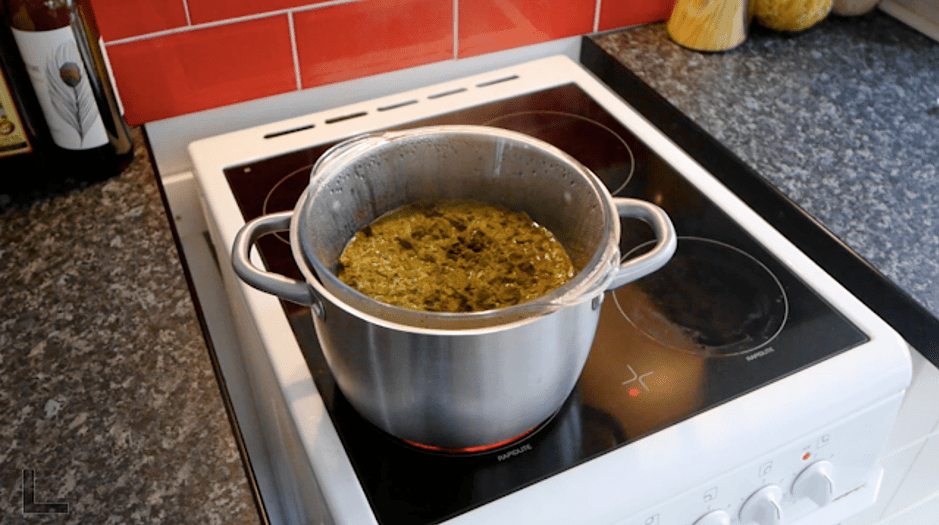 Place your bowl (I used a pyrex dish) over a pan of boiling water – it’s just like melting chocolate!
Once the henna is melted (it should be the consistency of yoghurt – add more boiling water if needed), it is ready to apply. If the henna cools too much just put it back over the boiling water and let it heat up again. You want to apply the henna to hair whilst it is hot (but not so hot that it is uncomfortable!).
 The melted henna should be the consistency of yoghurt – runnier and it will be a mess to apply, and if it is too thick it will be hard to apply to the hair.
So…below shows what the henna looks like once applied to hair. We all know what this looks like. But I’m not going to say it. Fortunately, coating my neck with vaseline prior to henna application prevented me from looking like the Tango man once I washed all this off. (For those of you not familiar with the Tango man, watch this).
 Looking like I sat under the wrong end of a cow.
How does Henna work?
To understand how henna works we have to look at the structure of hair. The outer layer of hair, called the cuticle, is composed of flat cells which overlap like scales and provides protection for the underlying inner layers. Underneath the cuticle is the thickest layer, called the cortex, which contains the hair pigment (melanin) and protein (keratin). The central layer is called the medulla, but not all people have this layer and even not all hairs on one person’s head may have a medulla! As great as science is, we still haven’t fully figured out the role of the medulla.
Chemical hair dyes must disrupt the cuticle to gain access to the inner cortex layer. To do this they often contain harsh chemicals such as ammonia which open or lift up the scales of the cuticle allowing peroxide in the dye to access the cortex to destroy the natural pigment, and allow the dye to be deposited. If hair is dyed too frequently with chemical dyes, the cuticle becomes damaged and the hair shaft will split and break.
 Repeated damage to the cuticle can result in loss of this protective layer, which leads to hair breakage. (Source of image is unknown. If you are the copyright holder for this image please contact me if you would like this image removed).
The red-orange pigment found in Henna (called ‘Lawsone’ or hennotannic acid) is able to penetrate the hair shaft and bind to keratin in the cortex. The difference here is lawsone is a relatively small molecule which is able to easily penetrate the hair shaft without the need to lift the cuticle scales (yay!). The reaction between lawsone and keratin (hair protein) only takes place in an acidic environment, hence the lemon juice found in the Lush Henna block.
As well as this, Henna does not destroy or replace the natural hair pigment; so the dye acts more like a tint. The colour outcome will depend upon the original colour of your hair, meaning that the final colour result is unique for each person!
The biggest question; is Henna safe?
So perhaps I should have researched this before applying henna to my hair. Nevertheless I did so whilst sat in old clothes with cling film and a towel wrapped around my henna-covered head, with tissue paper plugging gaps where a green(!) liquid dribbles down my neck. Fortunately, it looks like good news on the safety front.
Whilst the report published by the Scientific Committee on Consumer Products (SCCP) in 2005 concluded that the information currently available was ‘insufficient to assess the safe use of the substance as a hair dye‘, a subsequent report in 2013 concluded henna to be safe for the consumer provided a content of lawson does not exceed 1.4%. The reports did not find evidence of skin sensitization, mutagenicity (altering DNA by changing the genetic code) or genotoxicity (damaging DNA but not directly causing mutation) when testing henna compounds. The report did indicate that henna may show evidence of a low percutaneous absorption (absorption through the skin) and have the potential to be considered weakly clastogenic (causing breakage, deletion, and rearrangement of sections of chromosomes), although data on this front was concluded not to be of relevance or concern for consumers. In seperate studies, lawsone has been shown to be a weak haemolytic agent, however only appears to cause problems when applied topically to children suffering from a specific genetic disorder known as Glucose-6-phosphate dehydrogenase (G6PD) deficiency.
I contacted Lush to enquire about the percentage of lawsone found in their Caca Rouge product, and whilst they were unable to provide me with this value the lovely customer care advisor (Keilly) did assure me that all their products are tested on humans for safety and that ‘a chartered Scientist and registered Medical Practitioner carry out an assessment of the health and safety for human health of the finished product taking into consideration the general toxicological profile of each ingredient used, its chemical structure, its level of exposure and response from human testers‘. They also sent a follow-up email to let me know that the Caca Rouge block contains approximately 60% henna, whilst the Caca Marron block contains 45% henna.
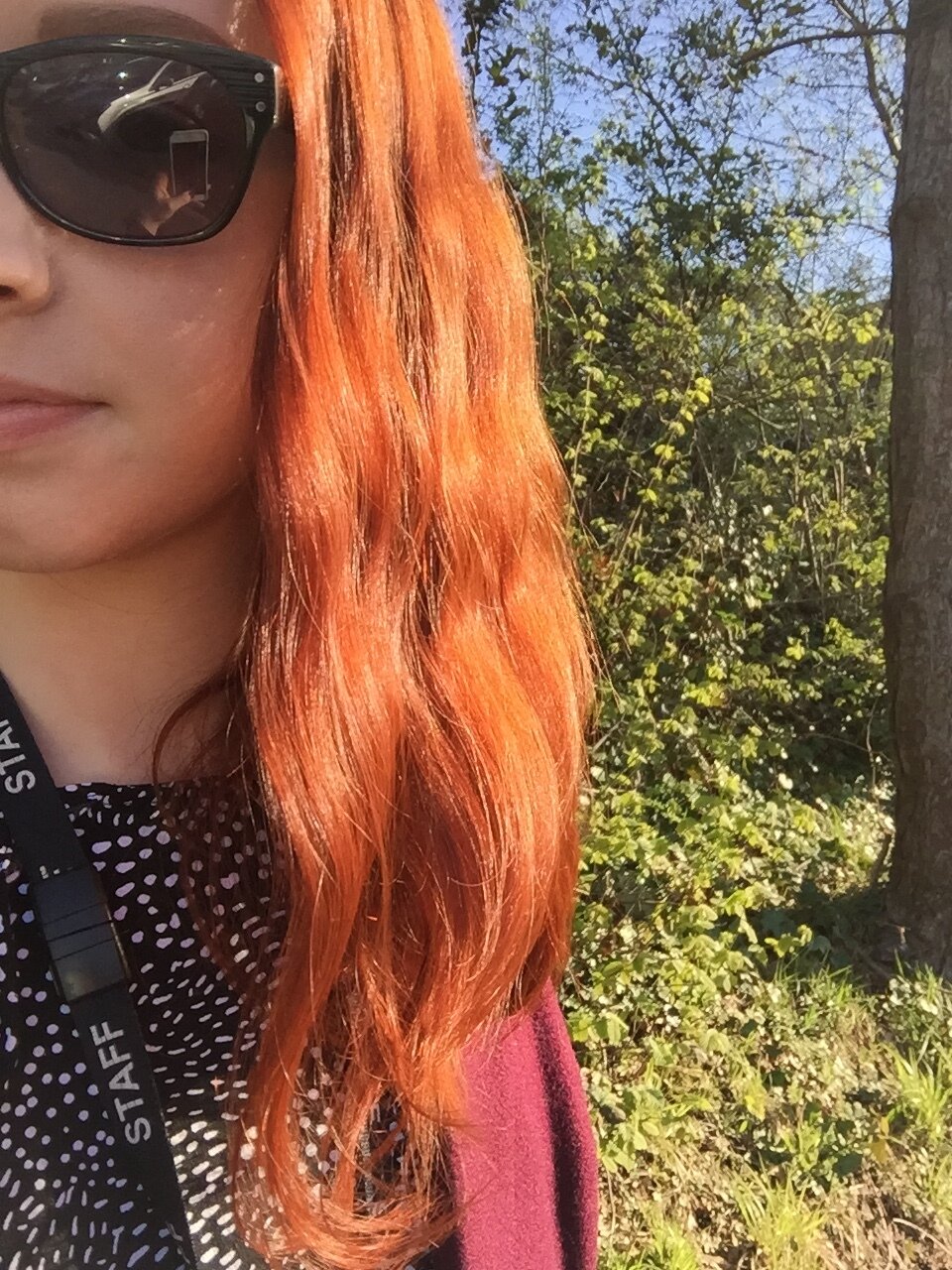
Final thoughts – I’m a Henna convert! The colour produced was lovely, lasted well and got loads of compliments!
In the sunshine, my hair took on quite an orange-tone (which I adored), and faded to an almost cherry colour!
P.S. This blog post was not sponsored or endorsed by Lush, I just think their product is great 🙂
– Jess [Last updated April 2020]


 Science, She Wrote
Leave a reply to Elizabeth Isralowitz Cancel reply