I like to knit. Problem is I’m not very good at it. I can easily follow the pattern instructions (as a scientist following protocols is second nature to me) but if you’re looking for that new knitted jumper to keep you warm this winter, you may be waiting a while. A long while.
Aside from the joy of knitting half-decent, long-awaited gifts for my friends and family…I’ve never really found knitting to be that soothing. Despite this, many recent reports have found that knitting, or engaging in other creative arts, could actually have health benefits including reduction of stress.

Cary Grant in the 1943 movie ‘Mr Lucky’ (RKO Radio Pictures).
The body’s response to stress is required for survival
Cortisol is a hormone secreted by the body and demonstrates a 24hr rhythm of secretion; low levels of cortisol are secreted at night, rising in the few hours before waking to peak shortly after waking, then gradually declining throughout the day. However, when the body experiences trauma either physically through illness, hypoglycaemia (low blood sugar) and surgery, or emotionally through experiences such as fear, increased amounts of cortisol are secreted. For this reason, cortisol is often referred to as the stress hormone. (It should be noted that cortisol is not the only hormone released in response to stress, other hormones such as adrenaline and noradrenaline are secreted, but it is cortisol that is often used as an analytical marker of stress).
The reason for stress stimulation of cortisol secretion is not entirely known, but it is thought to be an evolutionary adaptation for survival. Cortisol influences carbohydrate, protein, and lipid metabolism; triggering the formation of glucose from non-carbohydrate sources in the body and decreases uptake of glucose by many tissues in the body to allow free glucose to be used by the brain. If a human was unable to eat due to injury or a life-threatening scenario, the release of cortisol would ensure that the brain received adequate energy for survival. Cortisol also possess anti-inflammatory and immunosuppressive effects used to keep the immune system response to physical stress, such as illness or injury, in check.
Stress and Health
If cortisol secretion is raised above its normal levels by emotional stress such as anxiety and anger, this can negatively impact your body. For instance, studies found that perceived stress, due to an impending academic exams for example, resulted in a prolonged wound healing phase due to elevated levels of cortisol in otherwise healthy individuals. Lowering of perceived emotional stress levels, and therefore cortisol levels, is suggested to help speed up tissue repair.
Crafts and creative arts, such as knitting, have been shown to do just this and have been demonstrated to significantly lower cortisol levels. The benefits of reducing chronic stress, and therefore lowering stress hormone levels, are thought to extend far beyond wound healing: learning and memory, blood pressure, cholesterol, heart disease, bone density, depression, mental illness, and life expectancy can all be negatively influenced by raised cortisol levels.
Can’t Knit, Won’t Knit?
Crafts like knitting often require a learning curve, and can be quite frustrating for beginners! But breaking out the knitting needles and yarn isn’t your only option for decreasing stress levels. Amongst a wide range of other benefits, human-animal interactions have also been demonstrated to lower cortisol levels.
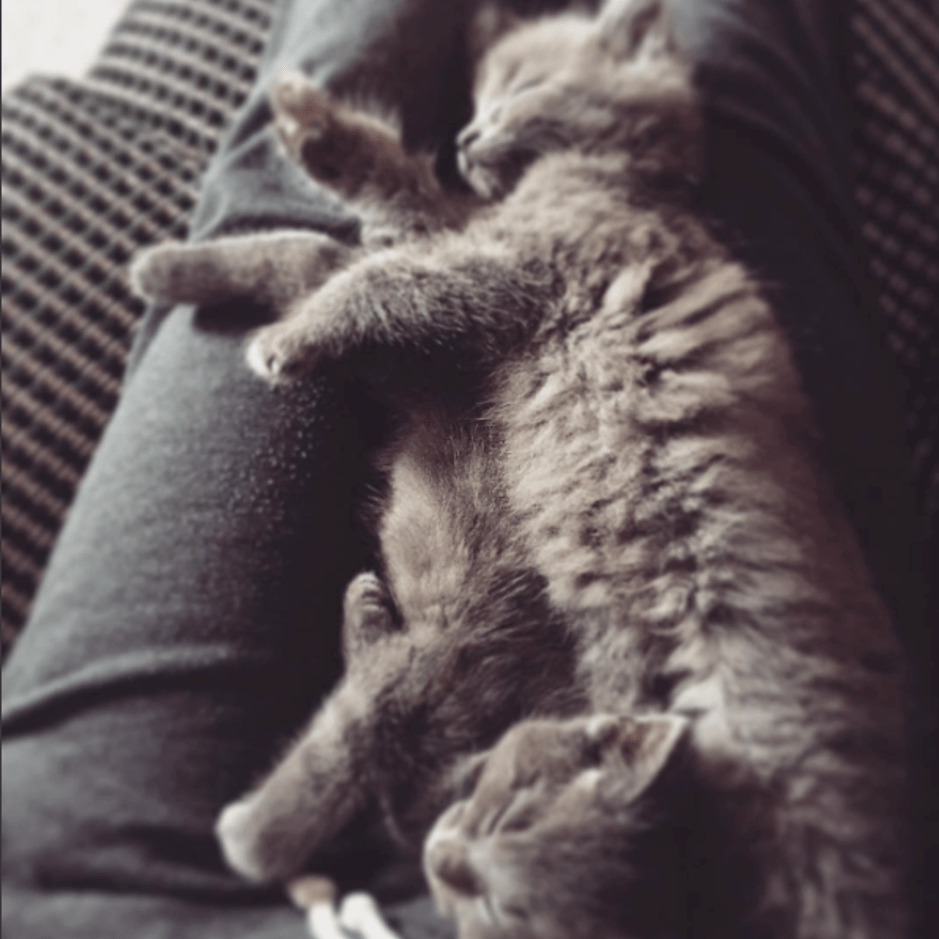 Fox and Scully (yes, names after that Fox and Scully) sleeping peacefully (and ever so cutely) after hours of playing!
Whilst we didn’t get these two little guys as any kind of cortisol-reducing therapy, they are adorable and so far less stressful than knitting!
– Jess
Last updated April 2020

 Science, She Wrote
Leave a comment