*WARNING: Spoilers ahead for Scream the TV Series Season 2*
 Emma Duval in Scream the TV series. Gif from scream.tumblr.com
In the shocking Season 2 episode ‘Happy Birthday to Me’ of Scream the TV series, Emma Duval and her friends unknowingly find themselves drinking Ayahuasca-spiked tequila at Kieran’s surprise birthday party. Supposedly left on her doorstep by the absent (and unbeknownst to the group, dead) Jake, each character suffers vivid hallucinations. Emma Duval about to be attacked by someone in a Brandon James mask – hallucination as part of her Ayahuasca trip, or another killer on the loose? (FYI probs another killer. I mean Jake didn’t do that to himself eh?).
‘Vine of the Soul’
Originating from Amazonian Peru, Ayahuasca, which translates as ‘vine of the soul’, is commonly made from two plants; the Banisteriopsis caapi (B.caapi) vine and the Psychotria viridis leaf, and is brewed as a traditional medicine.
B.caapi contains substances called harma alkaloids (harmine, harmaline and tetrahydroharmine), whilst plants such as P.viridis contain N,N-dimethyltryptamine (DMT). It is only a combination of the two plants, with the interaction between these substances, that will cause the psychedelic effects of Ayahuasca.
Harmine, and to a lesser extent harmaline, are selective and reversible inhibitors of an enzyme called monoamine oxidase A (MAO-A). MAO naturally breaks down chemical messengers in the body called neurotransmitters and potentially dangerous exogenous amines that could accidently be consumed in the diet, such as DMT. AnyDMT consumed would therefore be metabolized by the body, becoming biologically inactive and unable to produce its effect. Inhibition of MAO-A by harmines allows DMT to remain and it is absorbed into the bloodstream via the gut. The DMT can then travel around the body and cross the blood-brain barrier to receptor sites in the brain.
DMT is present in the leaves of P.viridis in large amounts and is structurally similar to the chemical messenger serotonin. Because of this, it can bind to serotonin receptors and activate the cellular response. Serotonin is commonly thought to be linked to feelings of well-being and happiness – it is thought that depression may result from a reduction in serotonin in the brain. It is likely that the interaction of DMT with serotonin receptors causes excitation observed in areas of the cerebral cortex (part of the brain) leading to the reported psychedelic experiences, but researchers do not have a complete or clear understanding of the action of DMT in the body.
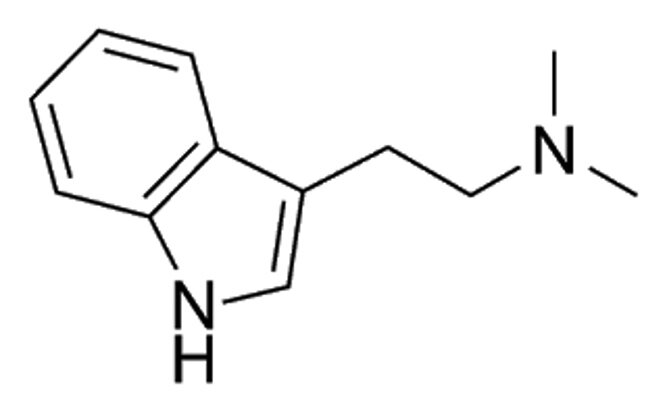
Looking at the chemical structures, DMT (top) has a similar structure to Serotonin (bottom) allowing it to interact with serotonin receptors in the body.
 Also found in the extract of B.caapi is the harma alkaloid Tetrahydroharmine (THH), which is thought to prolong action of serotonin, contributing to the overall effects.
Vomiting and threesomes?
As the unfortunate birthday party guests found, Ayahuasa often induces vomiting (and even diarrohea), which is considered to be a ‘tonic’ action of the drug, causing the body to release its negative emotions. Physically, however, vomiting experienced is due to increased stimulation of the vagal nerve by increased central serotonin activity, whilst a raise in peripheral serotonin levels can stimulate intestinal motility, causing diarrohea.
Typically, users experience a lag time of half an hour before onset of effects, with effects peaking at 1.5-2 hours after ingestion. For Brooke Maddox this meant vivid hallucinations of her ex Jake talking to her whilst Gustavo Acosta acted as her ‘guide’ for the psychedelic trip by… rubbing her feet (weird much?). Emma Duval hallucinates(?) someone in the Brandon James mask running towards her in the woods, whilst Audrey, Noah and Zoe…..appear to be well on their way to a threesome.
In reality, visual imagery experienced is reported to be like that experienced in dreams, and can easily be distinguished from hallucinations by the individual, with opening of the eyes or drawing attention to external cues causing the visualisations to disappear. Auditory hallucinations are rarely induced, instead perception of sounds may be modified, for example music may be felt more intensely. Visual and auditory stimulation may lead to temporary emotional and psychological distress, but users often report Ayahuasca that it allows them to recollect personal memories, or leads to introspection and illumination about one’s self or the universe. So it seems the writers of Scream may have taken several liberties regarding the effects of Ayahuasca in order to induce fear and further the storyline (and create some weird sexual tension).
Time to get psychedelic?
Recently, research has been turning to the use of Ayahuasca as therapy for anxiety, depression, substance use disorders, and for the handling of trauma. Even regular use of Ayahuasca appears to be reasonably safe, with no physical or psychological deterioration observed as a consequence.
Whilst the benefits of Ayahuasca may extend beyond the individual enlightenment sought by the thousands of travellers who flock to Peru each year seeking psychedelic revelation, DMT is considered a Class A drug in the UK and so its use in everyday medication of disorders is likely not to occur, or even be accepted, in the medical community for a long time.
– Jess
P.S. What an ending…


 Science, She Wrote